

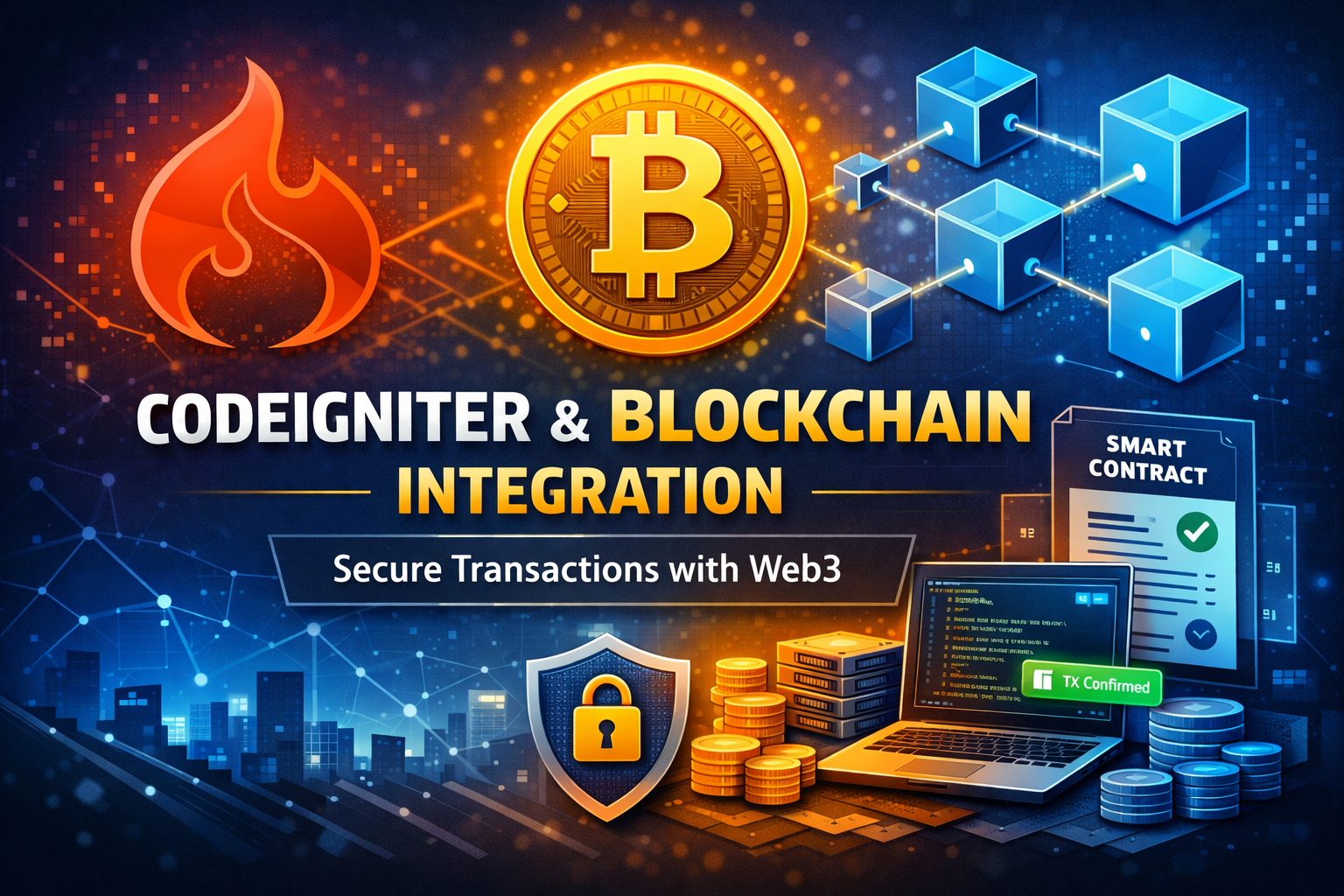
CodeIgniter and Blockchain: Building Secure Transaction Systems
As digital applications evolve, ensuring data security, transparency, and trust has become essential—especially for financial and transactional platforms. By integrating blockchain technology with CodeIgniter, developers can build highly secure and tamper-proof systems.
CodeIgniter, known for its simplicity and performance, becomes even more powerful when combined with blockchain’s decentralized architecture.
Why Integrate Blockchain with CodeIgniter?
CodeIgniter offers:
- Lightweight MVC framework
- Fast performance
- Easy configuration
- Strong database handling
Blockchain provides:
- Immutable data storage
- Decentralized trust model
- Enhanced security
- Transparent transactions
🔗 Combined Benefits:
- Fraud-resistant systems
- Secure financial transactions
- Transparent audit trails
- Decentralized applications (dApps)
Key Use Cases
1. Secure Payment Systems
Enable crypto-based payments with blockchain while CodeIgniter handles APIs and UI.
2. Supply Chain Management
Track goods with blockchain while displaying data via CodeIgniter dashboards.
3. Digital Contracts
Automate agreements using smart contracts triggered through CodeIgniter.
4. Identity Verification
Store identity hashes on blockchain and manage users via CodeIgniter.
Architecture Overview

CodeIgniter acts as a middleware layer connecting users to blockchain services.
Tools & Technologies
- Web3.php – Ethereum interaction
- Infura / Alchemy – Node access
- Solidity – Smart contract language
- Ganache – Local blockchain testing
- cURL / Guzzle – API communication
Integration Steps
Step 1: Setup CodeIgniter
Download and configure CodeIgniter project.
Step 2: Install Web3 Library

Step 3: Connect to Blockchain

Step 4: Smart Contract Interaction

Step 5: Send Transactions

Security Best Practices
- Store private keys securely (never expose in code)
- Validate all user inputs
- Use HTTPS and secure APIs
- Test on testnets before production
- Audit smart contracts thoroughly
Challenges
| Challenge | Description |
|---|---|
| Gas Fees | Blockchain transactions cost money |
| Speed | Slower than traditional systems |
| Complexity | Requires blockchain expertise |
| Scalability | Not ideal for heavy workloads |
Best Practices
- Use blockchain only for critical data
- Store large data off-chain (IPFS, cloud)
- Use caching for blockchain responses
- Implement queues for async tasks
- Maintain logs for traceability
Future Scope
With the rise of Web3, CodeIgniter developers can:
- Build decentralized apps
- Integrate crypto payments
- Develop hybrid Web2 + Web3 platforms
Conclusion
Combining CodeIgniter with blockchain enables developers to build secure, transparent, and future-ready applications. While integration requires effort, the benefits in trust and data integrity are significant.