
Laravel and IoT: Connecting Laravel Applications with Internet of Things Devices
The Internet of Things (IoT) is transforming industries by connecting physical devices to the internet, enabling real-time communication, automation, and data-driven decisions. From smart homes and healthcare monitoring systems to industrial automation and agriculture, IoT solutions are everywhere.
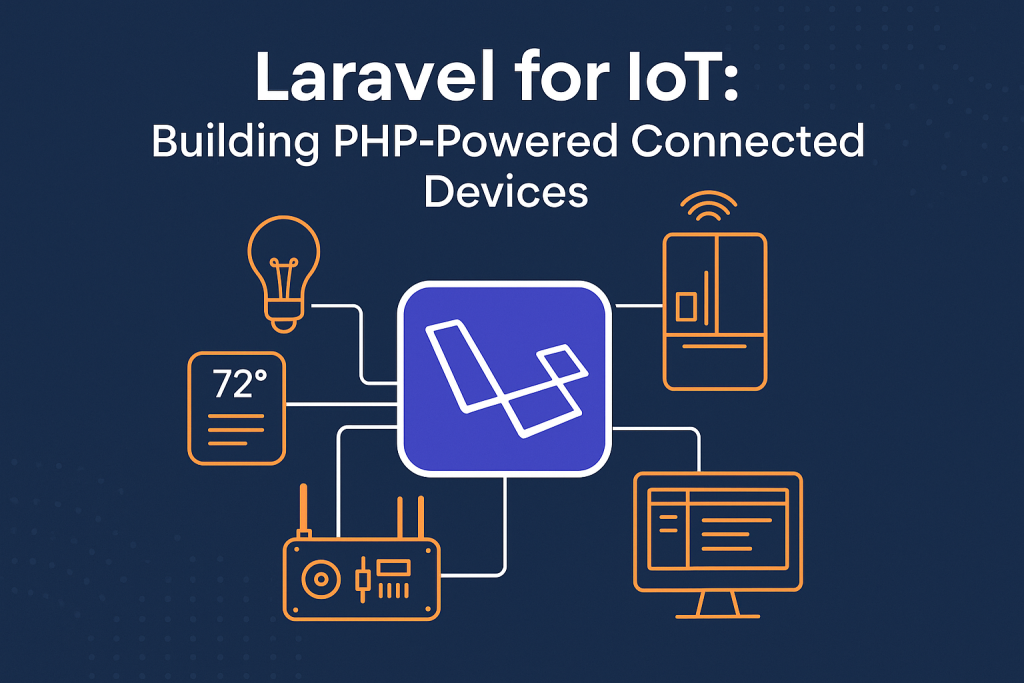
Laravel, one of the most popular PHP frameworks, is an excellent choice for building scalable and secure backends for IoT ecosystems. Its elegant syntax, powerful APIs, event broadcasting, and queue management make it ideal for handling connected devices.
In this blog, we’ll explore how Laravel can integrate with IoT devices, the technologies involved, and how to build a simple IoT-enabled Laravel application.
What is IoT?
IoT (Internet of Things) refers to a network of physical devices connected to the internet that can collect, send, and receive data.
Examples include:
- Smart thermostats
- Wearable fitness trackers
- Smart security cameras
- Industrial sensors
- GPS tracking devices
These devices communicate with backend systems to process data and trigger actions.
Why Use Laravel for IoT Applications?
Laravel provides several features that make IoT integration easier and more efficient.
1. RESTful API Development
IoT devices commonly communicate through APIs. Laravel simplifies API creation using:
- API routes
- Resource controllers
- Authentication with Sanctum or Passport
- JSON responses
Example API route:

2. Real-Time Communication
Laravel supports real-time broadcasting using:
- Laravel Echo
- WebSockets
- Pusher
- Socket.IO
This enables live dashboards for IoT monitoring.
Example use cases:
- Real-time temperature updates
- Vehicle tracking
- Smart factory monitoring
3. Queue Management
IoT systems generate massive amounts of data. Laravel queues help process background tasks efficiently.
Supported queue drivers:
- Redis
- Database
- Amazon SQS
- Beanstalkd
Example:

4. Event-Driven Architecture
Laravel events and listeners allow asynchronous processing.
Example:

This is useful for:
- Notifications
- Alerts
- Automation workflows
5. Security Features
IoT devices require secure communication. Laravel provides:
- CSRF protection
- API token authentication
- Encryption
- Rate limiting
- Middleware security
IoT Communication Protocols with Laravel
Laravel can work with multiple IoT communication protocols.
HTTP/REST APIs
The simplest and most common approach.
Device sends data:

Laravel controller receives it:

MQTT Protocol
MQTT is lightweight and ideal for IoT devices with limited bandwidth.
Laravel can integrate with MQTT brokers like:
- Mosquitto
- HiveMQ
- EMQX
Popular Laravel MQTT package:

Example subscriber:

WebSockets
WebSockets enable two-way communication between devices and applications.
Useful for:
- Smart dashboards
- Live notifications
- Monitoring systems
Laravel WebSockets package:

Building a Simple Laravel IoT Application
Let’s create a basic temperature monitoring system.
Step 1: Create Laravel Project

Step 2: Create Migration

Migration example:

Run migration:

Step 3: Create API Endpoint

Controller:

Step 4: Send Data from IoT Device
Example using Arduino or ESP8266:

Step 5: Display Data in Dashboard
You can use:
- Laravel Blade
- Vue.js
- React
- Livewire
Example chart integration with Chart.js:

Real-World IoT Use Cases with Laravel
Smart Home Automation
Laravel can control:
- Lights
- Fans
- Smart locks
- Security systems
Fleet Management Systems
Track:
- Vehicles
- Fuel consumption
- Driver behavior
- GPS location
Healthcare Monitoring
Monitor patient data:
- Heart rate
- Blood pressure
- Oxygen levels
Laravel can trigger emergency alerts instantly.
Industrial IoT (IIoT)
Factories use Laravel dashboards for:
- Machine monitoring
- Predictive maintenance
- Energy tracking
- Production analytics
Best Practices for Laravel IoT Development
Use Queues for Heavy Processing
Avoid blocking requests when processing sensor data.
Implement Rate Limiting
Protect APIs from overload.
Example:

Store Data Efficiently
IoT generates huge datasets.
Use:
- Database indexing
- Data archiving
- Time-series databases
Secure Device Communication
Always use:
- HTTPS
- API tokens
- Device authentication
- Encrypted communication
Monitor System Performance
Use tools like:
- Laravel Telescope
- Horizon
- New Relic
- Grafana
Challenges in Laravel IoT Applications
Some common challenges include:
| Challenge | Solution |
|---|---|
| Large data volumes | Use queues and caching |
| Device security | Implement authentication |
| Real-time updates | Use WebSockets |
| Scalability | Deploy with Redis & load balancing |
| Offline devices | Add retry mechanisms |
Future of Laravel in IoT
As IoT adoption continues to grow, Laravel can play a major role in:
- AI-powered IoT analytics
- Edge computing
- Smart city applications
- Predictive automation
- Cloud-connected devices
With Laravel’s modern ecosystem and scalability, developers can build robust IoT platforms faster than ever.
Conclusion
Laravel is more than just a web framework—it’s a powerful backend solution for IoT applications. Its support for APIs, real-time communication, queues, and security makes it ideal for managing connected devices and processing sensor data efficiently.
Whether you’re building a smart home system, industrial monitoring platform, or healthcare application, Laravel provides the tools needed to create scalable and secure IoT solutions.
As IoT technology evolves, integrating Laravel with connected devices will continue to open exciting possibilities for developers and businesses alike.